








By Shola Ogundipe
If you dropped a piece of fruit in your kitchen sink while rinsing it, would you think twice about popping it in your mouth? What if you dropped it in the toilet? Although the mere thought of retrieving anything from the toilet bowl may be enough to make you sick, your toilet may actually be cleaner than your kitchen sink; and that is a fact. It would interest you to know that germs live in some of the unexpected spots — like your kitchen sink.
Food particles from plates left to soak or rinsed from dishes turn kitchen sinks into perfect breeding grounds for some of the deadliest germs known. From here illnesscausing bacteria, including E. coli and salmonella can get on your hands or spread to foods. Among the dirtiest places, the kitchensink rules. Most people take decisive steps to sanitize and disinfect their toilet bowls, scrubbing and wiping several times in the day, yet few give their kitchen sinks the same consideration. 
They simply rinse with water and assume they are clean. But they’re not. Worse still, quite a large number of napkins, wiping cloths and sponges used in kitchens are heavily contaminated with harmful bacteria, meaning proper clean up can be difficult. In one particular study, independent environmental scientists found that 90 percent of kitchen cloths, 46 percent of kitchen sinks, 38 percent of bathroom sinks and 14 percent of children’s toys in 20 homes with children in the US, UK, Germany, Africa, Saudi Arabia, Malaysia and India, failed the test. They had a total bacteria count of more than 100,000 per square centimeter. There is a lack of appreciation that kitchen sinks can be contaminated with fecal organisms, either coming in with fruit and vegetables or from pets and children.
Other dirty places or items in the home
Your toothbrush: You put it in your mouth twice a day. You rinse it off after using it and put it away damp, but do you ever think of all the germs lurking on it? Bacteria like the moist area and grow on it. If you keep your toothbrush in the toilet, it could be contaminated for at least two hours after each flush. Place your toothbrush where it can air out and dry between uses but not too close to the toilet. Replace your toothbrush often, particularly after you’ve been sick, and close your toilet lid before flushing.
SALT AND PEPPER SHAKERS: Tests on 30 salt and pepper shakers found viruses on 41 percent of the surfaces tested, and every one of shakers tested were positive for cold viruses. When you wipe the kitchen table after eating, wipe off the salt and pepper shaker too. Wash your hands before and after.
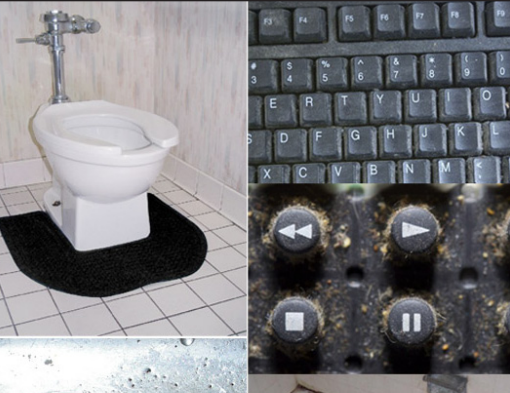
TV REMOTE CONTROL: They are often dropped on the floor, stuffed between the sofa cushions, coughed on and sneezed at, and handled with dirty fingers. Everyone in the house handles it. Anything people touch a lot has germs on it. The remote control’s surface is among the germiest. Wipe your remote with bleach or alcohol wipes. Regular hand-washing is the best way to protect you against these germs.
COMPUTER KEYBOARD: If you eat at your computer, sneeze on your keyboard, or sit down to surf the Internet without first washing your hands, your computer keyboard could be a health hazard. Wash your hands before and after using your computer. If you must eat at your desk, don’t drop crumbs into your keyboard. Gently shake out the crumbs or vacuum it. Wipe the keys with alcohol or bleach wipes, but nothing too wet. Wipe the mouse.
THE BATHTUB: The very place where you clean yourself is not so clean itself. Staphylococcus bacteria is found in 26 percent of tubs. Clean and disinfect your tub with bleach or bathroom cleaner after bathing, then dry with a clean towel. Wash your hands Lots of germs are harmless; many are even good for your health. But you can help protect yourself from those that aren’t by keeping your hands clean. Hands transfer bacteria and viruses to eyes, nose, and mouth. They can also transfer germs to others. Regular hand washing with soap and water is the best protection.
Tips on how to clean your kitchen sink
- Wash sinks with a solution of bleach and water once a day
- Then let the solution run down the drain.
- Remove the drain plug and clean it, too.
- Sterilize sponges with a one-minute high-powered blast in the microwave. Or simply forget sponges entirely and clean food spills with a paper towel and dump it.
- Then wash your hand


Your post is a true masterpiece. I\’ll be referencing it in my own work.
I\’m honored to hear that. I\’m always striving to provide the best information possible.
This post is a game-changer. I\’ve learned so much from it – thank you!
Your post is a true masterpiece. I\’ll be referencing it in my own work.
I\’m so glad I found your site. Your posts are consistently excellent.